





The Divided Brain: What Is Really Driving Your Decisions?
What if the decisions you make every day aren't nearly as rational as you think they are?
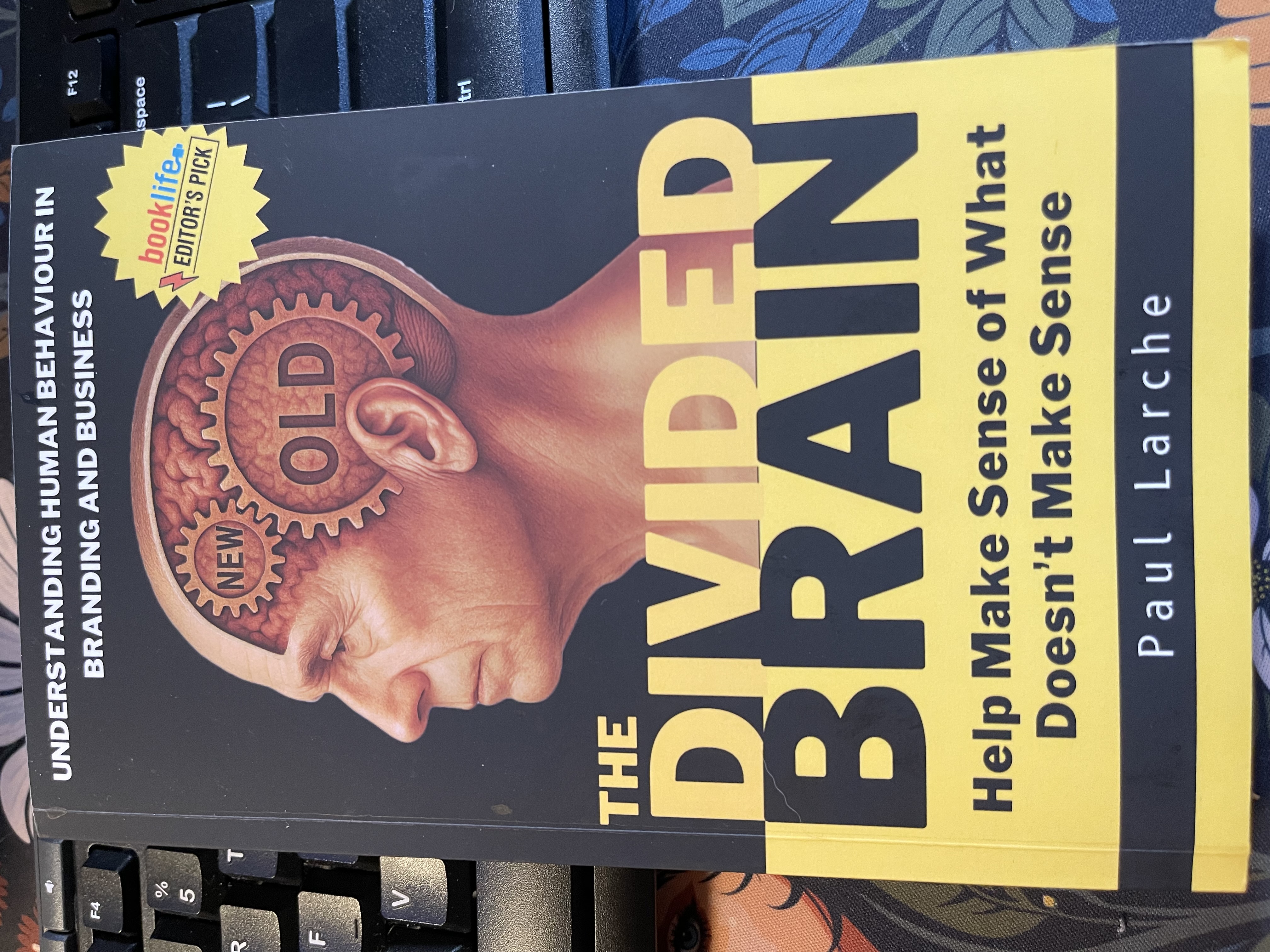
That's one of the questions at the heart of Paul Larche's fascinating book, ‘The Divided Brain: Understanding Human Behaviour in Branding and Business’.
And if you are an entrepreneur, business owner, marketer, salesperson, leader, or anyone whose success depends on communicating with other human beings, this is a book worth paying attention to.
Larche introduces a simple but powerful framework built around what he calls the Old Brain and the New Brain.
The Old Brain is fast, emotional, instinctive, and focused on immediate responses. The New Brain is slower, more analytical, and responsible for reasoning and reflection. The interesting part is what happens when those two systems interact, because we don't always make decisions the way we think we do.
And that has enormous implications for business.
Think about the last time a potential client said, “Let me think about it.”
Was that really a logical evaluation of your offer?
Or had something already happened emotionally, with the rational explanation coming afterward?
That is the kind of question The Divided Brain encourages you to start asking.
What I particularly like about this book is that Paul Larche doesn't leave the reader sitting in a neuroscience lecture. He takes these ideas and connects them to branding, marketing, sales, leadership, negotiation, communication, and the everyday decisions we all make.
That's where the book becomes especially useful.
Because knowing what people do is one thing.
Understanding why they do it is something else entirely.
For those of us who spend our days building businesses, creating brands, selling ideas, interviewing people, leading teams, or trying to get our message heard, that distinction matters.
And there is another piece of this conversation that I think deserves attention: ethics.
Understanding how people make decisions gives us tremendous influence. But influence and manipulation are not the same thing. The ability to understand human behavior should come with a responsibility to use that knowledge well. That ethical dimension is one of the things that makes this book more interesting than a typical “here's how to get people to buy” business book.
By the time you finish The Divided Brain, you may find yourself looking at advertising, sales conversations, websites, branding, leadership, and even your own purchasing habits a little differently.
And that's usually the sign of a good business book.
It doesn't just give you information.
It changes what you notice.
I'm especially looking forward to continuing this conversation with Paul Larche when he joins me on Your Partner In Success Radio in September. With his background in branding and decades of experience helping organizations understand what makes people connect with a brand, I'm expecting a conversation that goes well beyond marketing tactics.
If you've ever wondered why people say one thing and do another, why logic doesn't always win the sale, or why some brands become unforgettable while others disappear into the noise, The Divided Brain may give you a very different way of looking at the answer.
And once you start looking at human behavior through this lens, you may find yourself asking a very different question:
Which brain is making the decision?
You can find this book on Amazon.