





Why I Rarely Use Podcast Guest One Sheets (And What I Do Instead)
As a podcast host, I receive a steady stream of guest one sheets. Many of them are beautifully done. They’re polished, thoughtfully written, and clearly designed to make a strong first impression.
And yet, I almost never rely on them.
That’s not a criticism of the effort behind them. It’s a reflection of how I choose to prepare for meaningful conversations.
A one sheet is, by design, curated. It highlights what someone wants me to see. It presents the best angles, the most marketable talking points, and the safest version of their story. That can be useful, but it’s not enough for the kind of conversations I host.
What I’m looking for goes deeper than a list of topics or a short bio.
I want to understand how someone thinks. I want to see how they show up in real conversations. I want to know what they care about when they’re not packaging themselves for a pitch.
That’s why I start somewhere else.
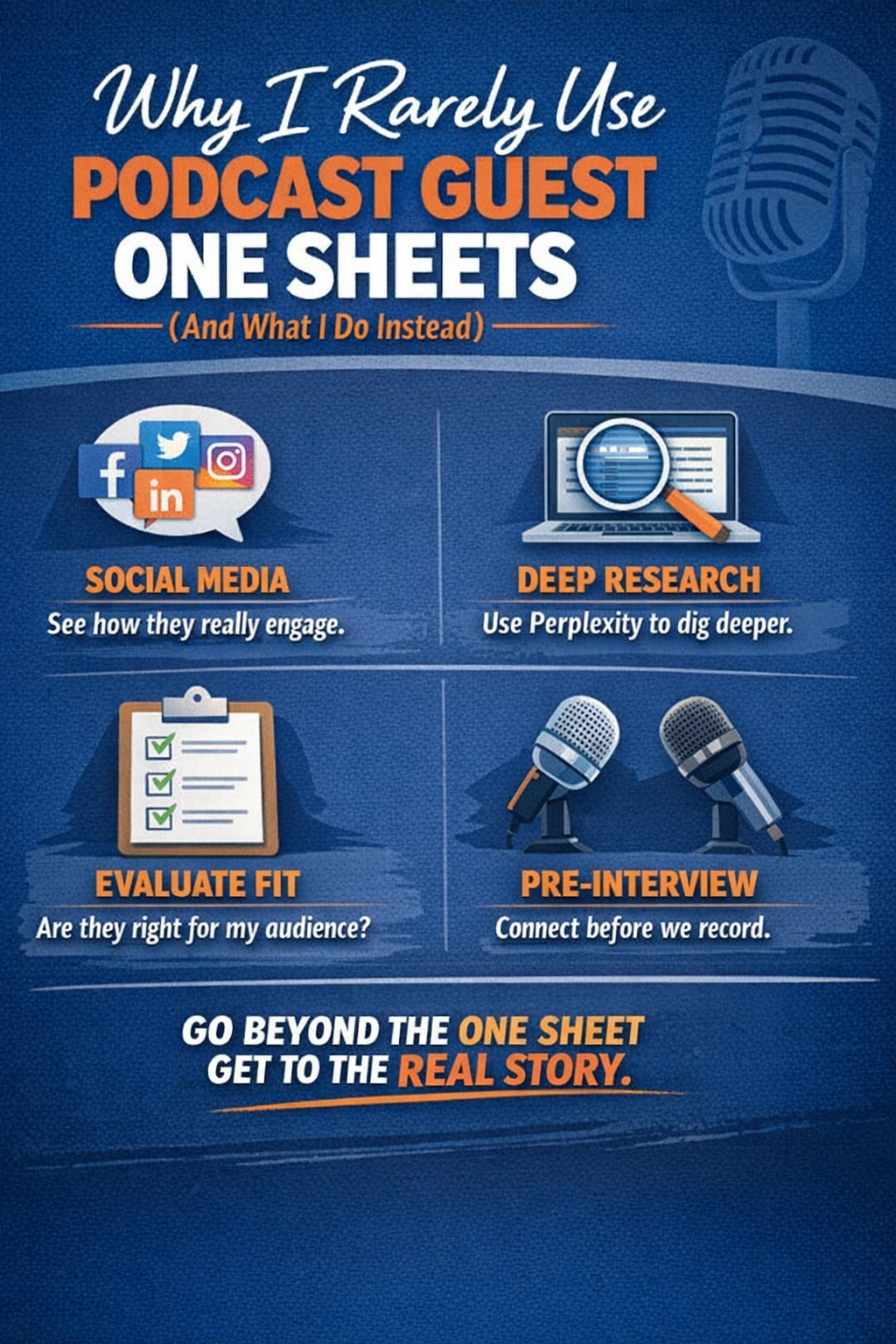
When a potential guest catches my attention, I go to their social media first. Not to scroll endlessly, but to observe. How do they communicate? Are they consistent? Do they engage with others or just broadcast? Is there substance behind the surface?
From there, I do a deeper search using Perplexity.
This is where things get interesting.
Instead of relying on a single, curated document, I get a much broader view. I can see interviews they’ve done, articles they’ve written, podcasts they’ve appeared on, and how their ideas hold up across different platforms and conversations.
Patterns emerge quickly.
I can tell when someone repeats the same surface-level talking points everywhere they go. I can see whether they bring depth, nuance, and originality, and I can get a much clearer sense of whether they're truly a fit for my audience.
That last part matters more than anything.
A great one-sheet can make almost anyone sound like a perfect guest. But my responsibility isn't to the pitch. It's to my listeners.
That's where Perplexity comes in. It gives me context, perspective, and confidence that a one-sheet simply can't. By the time I move forward with someone, I already have a strong sense of who they are, how they communicate, and what they bring to the conversation. I'm not walking in cold.
That groundwork is exactly why the pre-interview matters. It's not a screening. It's a real conversation where we confirm the fit, shape the direction of the episode, and make sure what we create will genuinely serve my audience. We get comfortable, find a natural rhythm, and establish a real connection before we ever hit record.
That step isn't optional, and I only schedule it after doing the research first.
By the time I say yes to a guest, I'm not relying on a summary. I'm walking into the conversation informed, prepared, and genuinely interested.
And that leads to better interviews. Every single time.