






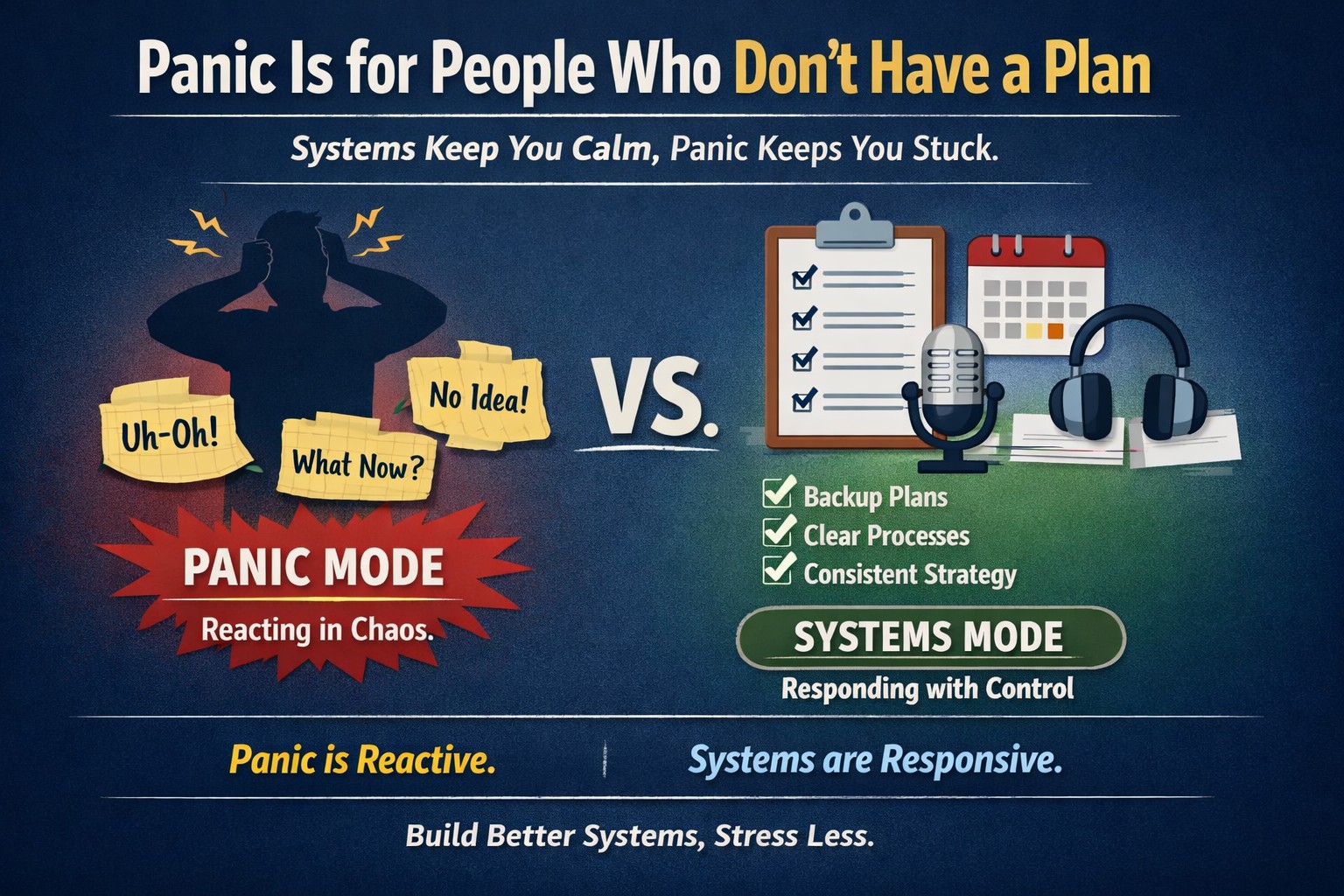
When something goes wrong in your podcast, panic isn’t inevitable. It’s a sign that systems are missing. Let’s fix that.
Panic usually shows up when something unexpected happens. A guest cancels. An episode underperforms. Tech fails five minutes before you hit publish. The instinctive reaction is stress, scrambling, and second-guessing everything.
But panic isn’t actually caused by the problem.
Panic is caused by the absence of a plan.
When you don’t have systems in place, every small disruption feels catastrophic. There’s no buffer. No fallback. No clear next step. So your brain fills the gap with noise and urgency instead of logic.
Systems change that completely.
A system doesn’t eliminate problems. It removes the emotional chaos around them. When something goes wrong and you already know what happens next, panic has nowhere to land.
If a guest cancels and you have:
A short list of standby episodes
A bank of solo topics you can record quickly
A clear rescheduling process
…then the cancellation is an inconvenience, not a crisis.
If an episode doesn’t perform well and you have:
Consistent publishing habits
Clear audience feedback loops
A long-term content strategy
… then one low-download week doesn’t send you into a spiral.
This is especially true in podcasting because the work is public. Missed episodes are visible. Inconsistency is noticeable. And without systems, that visibility amplifies stress.
Professionals don’t rely on motivation. They rely on repeatable processes.
That doesn’t mean everything is rigid or robotic. It means you’ve already done the thinking ahead of time. You’ve decided how you handle common problems before emotions get involved.
Planning isn’t about control. It’s about calm.
When you know:
How guests are booked
How episodes are produced
How content is scheduled
How disruptions are handled
… you stop reacting and start responding.
And that’s the difference.
Panic is reactive.
Systems are responsive.
If you find yourself constantly stressed about your podcast, the solution usually isn’t “try harder” or “care less.” It’s almost always this:
Build better systems so you don’t have to make decisions under pressure.
Because panic is loud.
Plans are quiet.
And quiet is where consistency lives.
Denise Griffitts
Host, Your Partner In Success Radio