






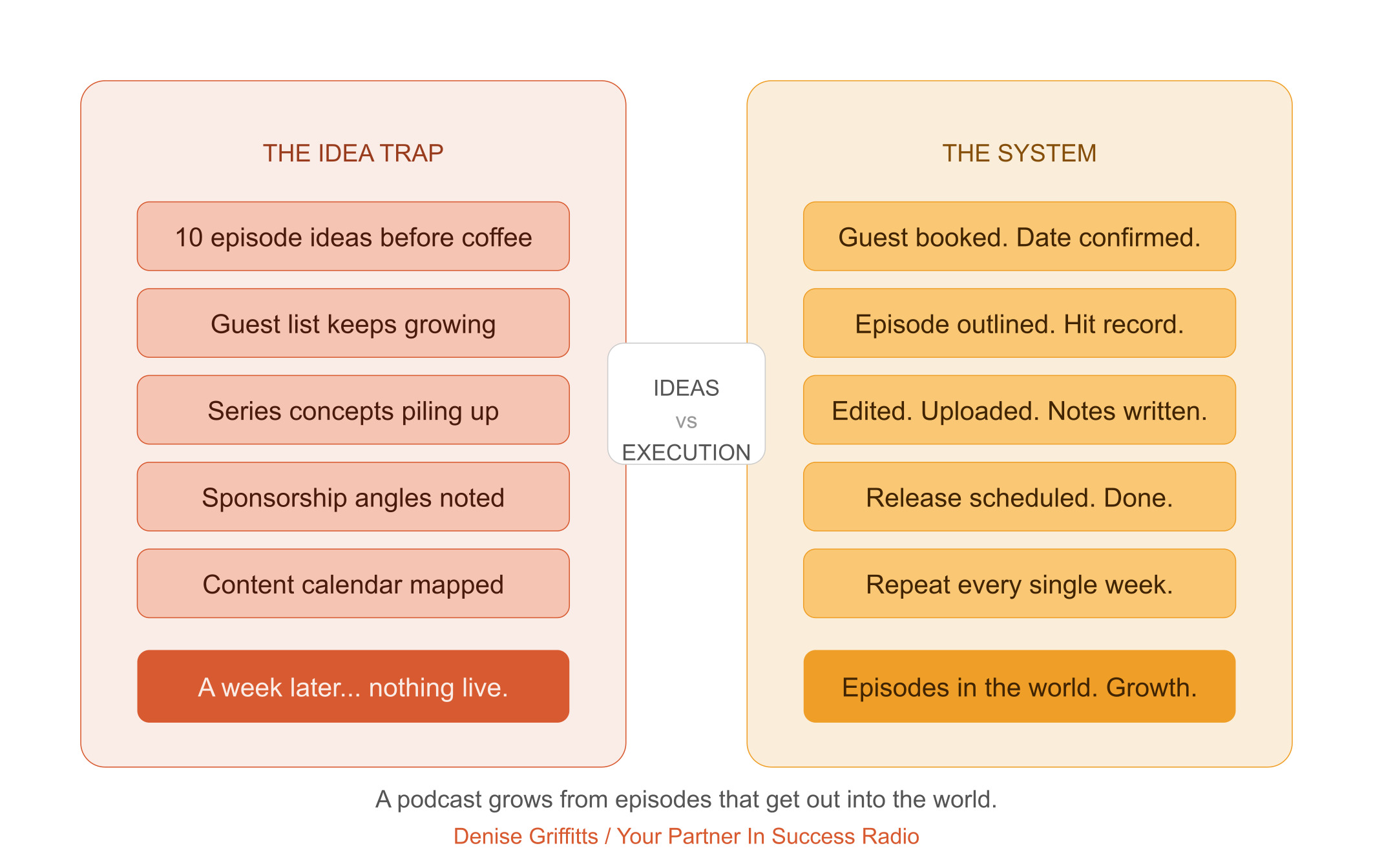
AI will give you 10 podcast episode ideas before you finish your first cup of coffee. That has never been the hard part.
The hard part is the same thing it has always been: Who is recording it? When does it go live? What gets moved to make room for it?
I talk to hosts every week who are fired up about what they could create. Topics, guests, series ideas, sponsorship angles. A week later, nothing is published. Not because inspiration ran dry, but because no one booked the guest, no one outlined the episode, no one hit record, and no one pushed it across the finish line.
The ideas were never the bottleneck. It was always execution.
So how do you get out of your own way?
You need systems!
Pick your recording days and protect them. Two days a month, blocked and non-negotiable. Your podcast gets scheduled like a client call, not squeezed in when things slow down.
Use the "next three" rule. Before you brainstorm another episode idea, make sure the next three already have a confirmed guest, a rough outline, and a publish date. Ideas do not go on the list until the pipeline is moving.
Name who owns every step. Guest outreach, recording, editing, show notes, scheduling, social media. Write it down. Even if it is all you, every task needs a day and a deadline attached to it.
Shrink your production window. If your process takes three weeks from record to publish, something is too complicated. Tighten the format until you can get an episode out in a few days. Simple formats ship. Elaborate ones stall.
Decide what gets published this week, not someday. Look at your calendar right now. What is actually getting recorded and released in the next seven days? If you cannot answer that, you are planning, not podcasting.
The hosts building real momentum are not the most creative ones in the room. They are the ones who built a simple, repeatable process and kept showing up inside it.
A podcast does not grow from ideas. It grows from episodes that actually reach people.