





The One-Sheet Is Not the Interview
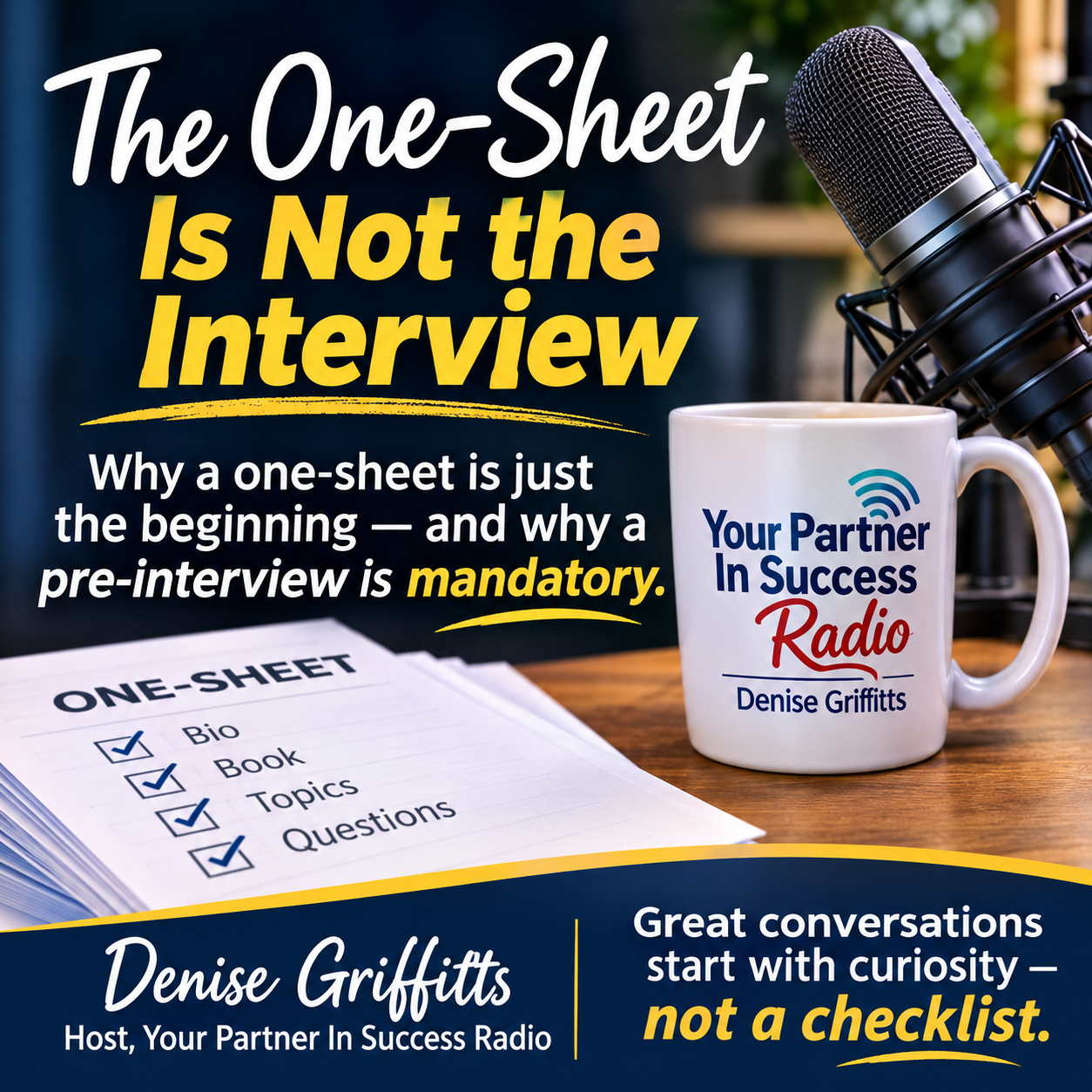
After nearly 19 years of hosting Your Partner In Success Radio, I've received more podcast pitches, guest biographies, and professionally designed one-sheets than I could possibly count. They arrive in my inbox regularly, usually accompanied by an enthusiastic introduction, a list of accomplishments, a book cover, suggested interview topics, and a collection of questions someone has thoughtfully prepared for me to ask.
And I'll let you in on a little secret: I don't even open most of them.
It's not that I don't appreciate the effort. I understand that a one-sheet serves a purpose. It's a marketing document designed to showcase a guest, establish credibility, and make a compelling case for an appearance. But I've never confused a marketing document with an interesting conversation.
And those suggested questions? They're a starting point, not a script.
Over the years, I've learned that the most interesting conversations rarely come from asking someone to repeat what they've already written in their biography or prepared for every other podcast appearance.
I want to know how someone thinks. I want the stories behind the accomplishments, the decisions that didn't work, the lessons learned the hard way, and the opinions that might challenge conventional wisdom.
I want to ask the questions the guest wasn't expecting.
And this is precisely why a pre-interview with me is mandatory.
Before anyone is scheduled for a full-length interview on Your Partner In Success Radio, we meet on Zoom for a pre-interview. This is not a formality, a sales call, or an opportunity to rehearse a list of prepared answers.
It's where we get acquainted, explore the proposed subject matter, identify the most interesting angles, and determine whether we have the foundation for a genuinely worthwhile conversation.
It also gives me an opportunity to hear how a prospective guest communicates, how they respond to questions, and whether their expertise translates into something useful and engaging for my audience.
Just as importantly, it gives the guest an opportunity to get to know me, understand the format, and decide whether the show is a good fit for them.
A good interview requires curiosity, preparation, listening, and the willingness to follow an interesting thread rather than rush to the next question on a list. That kind of conversation doesn't happen by accident.
A one-sheet can tell me who someone wants the world to see. A pre-interview helps me discover the person behind the promotional material. The actual interview gives us the opportunity to take that discovery somewhere meaningful.
So, by all means, send your one-sheet. Include your biography, your book information, your accomplishments, and the subjects you're qualified to discuss.
Just don't mistake it for the conversation, and don't mistake a booking request for a confirmed appearance.
The one-sheet may get your foot in the door. The pre-interview establishes whether there's a conversation worth having. What you bring to the microphone is what makes people want to listen.
A Little Practice Before the Big Conversation
One thing I've come to appreciate is that being comfortable in a conversation and being prepared for one are two different things.
Whether you're appearing on a podcast, hosting an interview, making a sales presentation, or dealing with a difficult leadership conversation, it helps to practice out loud. You may have your talking points memorized, but how do you respond when someone asks an unexpected question or challenges your thinking?
That's an interesting problem addressed by The Rehearsal Studio App, which provides an opportunity to practice conversations with AI participants who actually respond to you verbally.
There are three practice environments:
- Podcast: Practice answering interview questions about your own material or take the host's role and interview one of 15 AI guests.
- Sales: Work through conversations with 14 different prospects, including people who have objections and aren't ready to buy.
- Leadership: Rehearse challenging workplace conversations, including termination discussions and managing former peers.
The app also offers recorded practice with feedback on things like pacing, filler words, eye contact, energy, and how you open and close a conversation. You receive coaching tips while speaking and a post-conversation review. Camera use is optional, and recordings are private and deleted after 15 days.
There are several subscription levels, starting at $39 per month, or you can try a single session for $19 without a subscription.
I think the underlying idea is worth considering: You don't have to wait until an important conversation is happening to find out how well you handle it.
Whether you're preparing for a podcast interview or a conversation that could affect your business, practicing beforehand gives you an opportunity to work through your thoughts, hear yourself speak, and become more comfortable thinking on your feet.
You can learn more at The Rehearsal Studio App. https://therehearsalstudio.app/
Practice in private. Perform in public.